

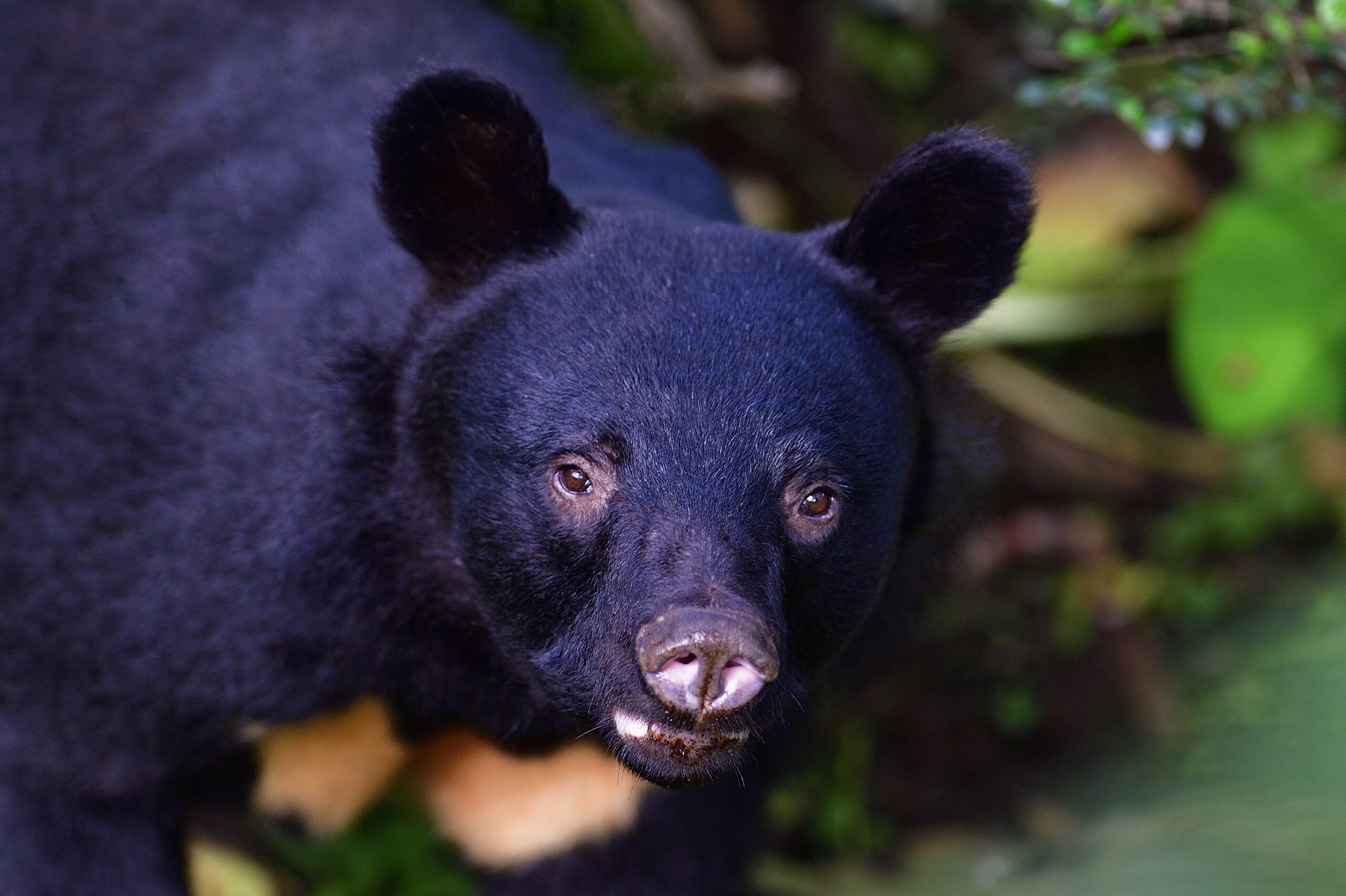
Bear attacks on the rise in Japan: How to safely hike our forests and mountains
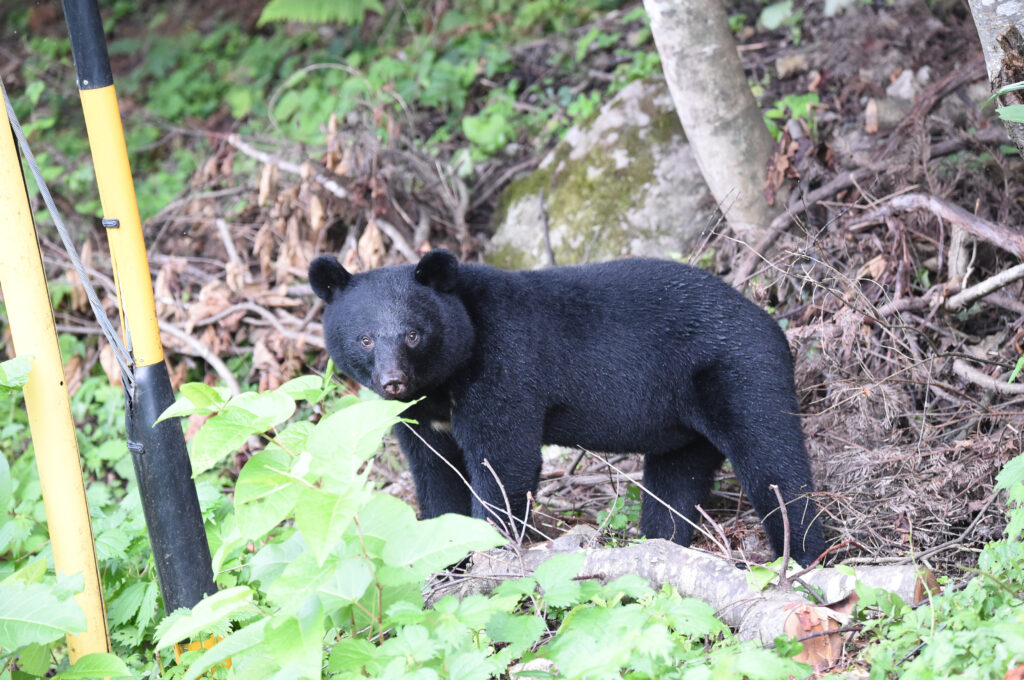
Staying safe in bear habitats
When entering areas where bears live, it is important to make your presence known through scent or sound so that bears can avoid you. The Asiatic Black Bear (tsukinowaguma ツキノワグマ) doesn’t normally prey on humans for food. It mainly feeds on fruits, nuts, insects and little mammals. The black bear will avoid human presence as much as possible. That being said, when meeting a human by surprise, the bear is likely to attack by instinct, or flee.
Going in a group, using bear bells, and other measures can help achieve this. Depending on the situation and location, you can adjust which noise-making tools to use. Avoid areas where bears have been recently sighted.
Letting bears know you are there
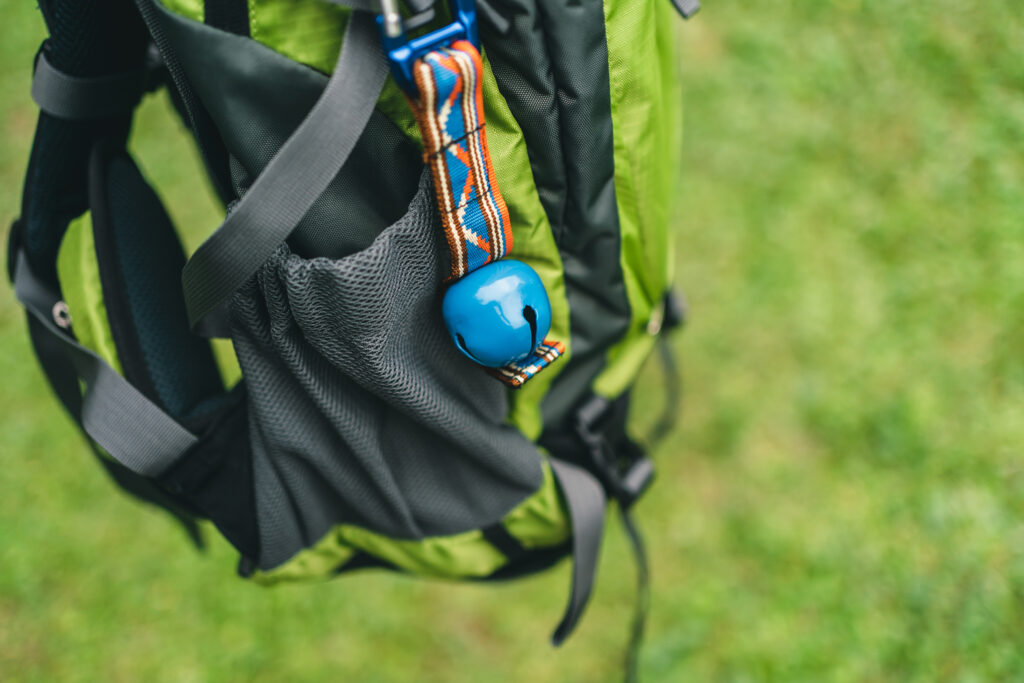
In areas with few people : Using a Bear Bell
On less-traveled routes or side trails, where human presence is minimal, using a bear bell is recommended. This is especially important for solo hikers. Attach the bell to your backpack or belt so that it rings with your movement. The sound and tone vary depending on the shape and material of the bell, so carrying different types can cover a wider range of situations. There are also bells with a mute function, useful when traveling on trains or buses.
Buy a bear bell
Buy a bear bell on Amazon.co.jp; in a Montbell shop or in one of our “home centers” (DIY stores) in Tsuruoka:
-Close to Tsuruoka station : Komeri Tsuruoka
-Close to Mt. Haguro: Komeri Haguro
-Close to Shonai Kankobussankan bus station: Musashi
Using a Bear Horn – 130dB
Using a spray-type whistle can produce a sound louder than a car horn—130 decibels, audible up to 805 meters. When entering bear habitats, use it periodically to alert bears from a distance and prevent encounters. It can also be used as an emergency whistle in case of accidents.
Buy a bear horn in a Montbell shop (around 3400 yen)
https://webshop.montbell.jp/goods/disp.php?product_id=1899177
When Moving Slowly (e.g., foraging for wild plants) : Using the Radio or music on your smartphone
If your movements are minimal, such as during foraging, and bear bells may not make enough noise, consider playing a radio or making other forms of audible presence.
How to react if you encounter a bear
From a distance (~50 meters)
If you notice a bear far away, remain calm and quietly leave the area. Avoid sudden movements or loud shouts, as they may startle the bear. Be especially cautious around mother bears, which are more likely to be aggressive.
- Retreat slowly and quietly while keeping your eyes on the bear.
- Do not run, turn your back, make loud noises, or leave your belongings behind.
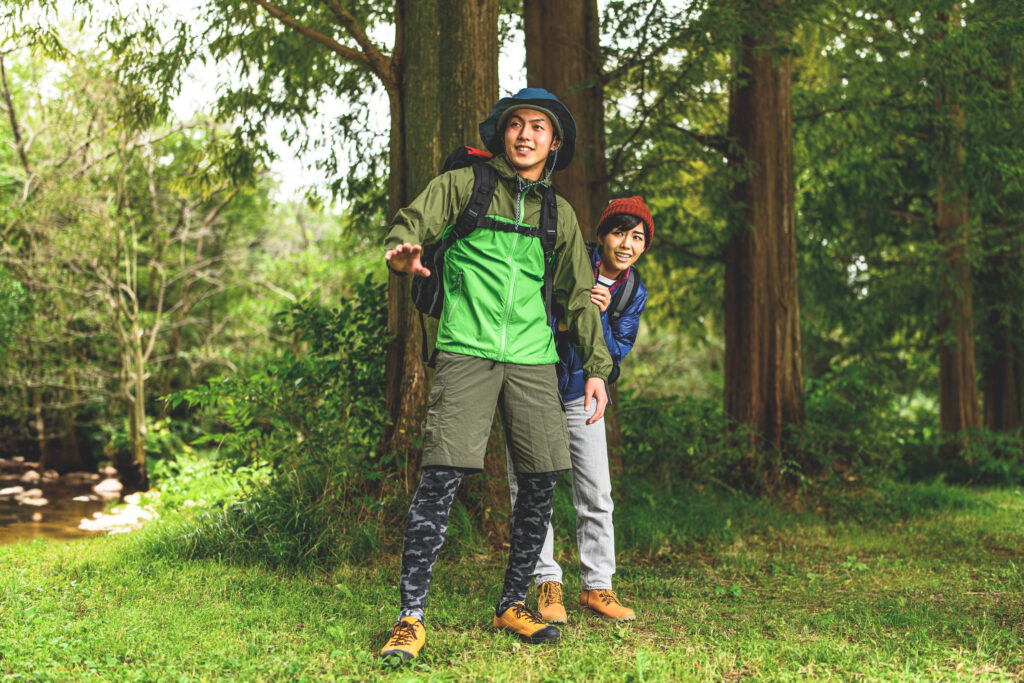
Closer distance (~20 meters)
Back away slowly and quietly, keeping obstacles between you and the bear. Do not run or shout. If the bear charges, remember that many charges are bluff charges, and the bear may stop and back off on its own. Stay calm and respond cautiously.
At very close range, or if the bear approaches
- Use bear spray without hesitation.
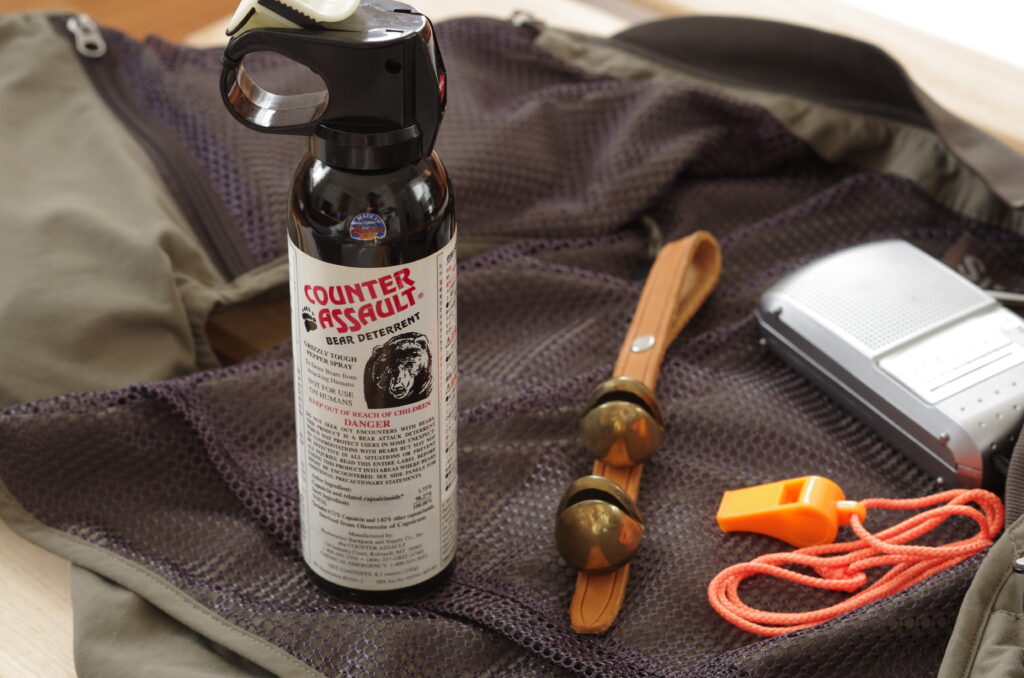
Buy a bear spray in a Montbell shop (around 13400 yen)
Take advantage of any hesitation by the bear to move to a safe place.
Bear spray is a pepper-based spray that temporarily blinds and disorients a bear, giving you time to retreat.
At very close range, the risk of a direct attack or an aggressive reaction is higher. There is no guaranteed way to prevent an attack, but carrying and knowing how to use bear spray greatly increases your chances of deterring a bear.
Do not store bear spray inside your backpack—keep it on your belt or in an accessible pocket so you can use it quickly. Practice deploying it before you go hiking.
- Spray effectiveness is reduced if you are farther from the bear than the spray range. Once you have sprayed the bear, run as fast as possible to escape to a safe place (car, lodge, restaurant, etc)
In case an attack is inevitable:
Lie on the ground and curl your body into a tight ball, with your knees pulled to your chest.
Keep your backpack on—it will protect your back.
Use your arms and hands to cover your head and the back of your neck.
Always try to hike with someone else as much as possible
Try to avoid hiking alone whenever possible.
Hike with friends, or consider hiring a guide.
Groups of two or more people are less likely to be attacked by bears.
However, being in a group does not replace carrying bear spray or following other safety precautions.
If you spot a bear
Please let us know by contacting us through our contact form and precise:
Where, when, and how many bears you have spot. Please specify if you are safe or if you were attacked.
Thank you, and please stay safe on our hiking trails.