

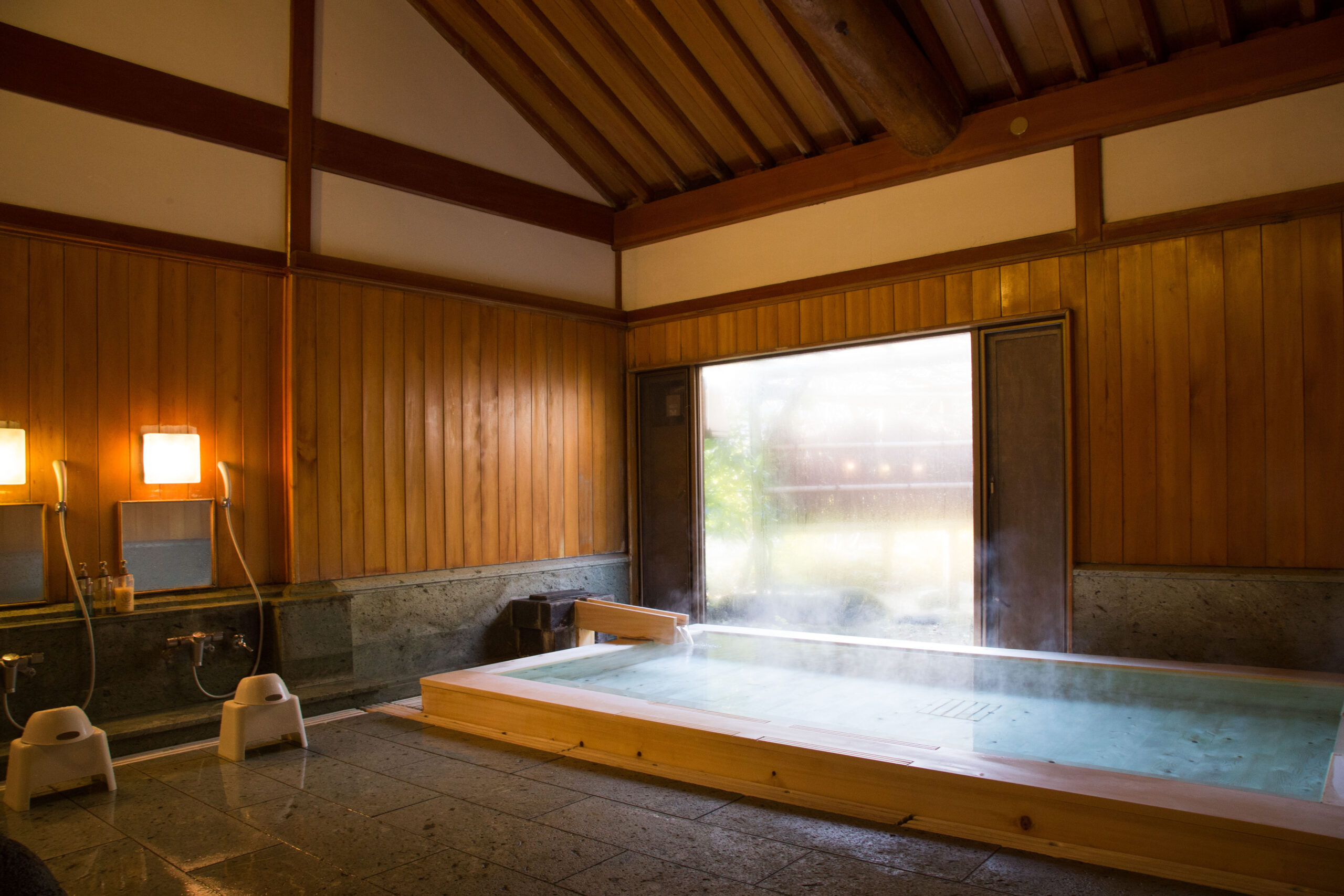
Yudonoan
Yudonoan stands as a luxurious ryokan nestled in Yutagawa Onsen. Its cocoon-like rooms seamlessly blend Japan’s traditional style with a touch of modern minimalism. Possesses rooms with European-style beds for your comfort.
 News
News
Yudonoan stands as a luxurious ryokan nestled in Yutagawa Onsen. Its cocoon-like rooms seamlessly blend Japan’s traditional style with a touch of modern minimalism. Possesses rooms with European-style beds for your comfort.
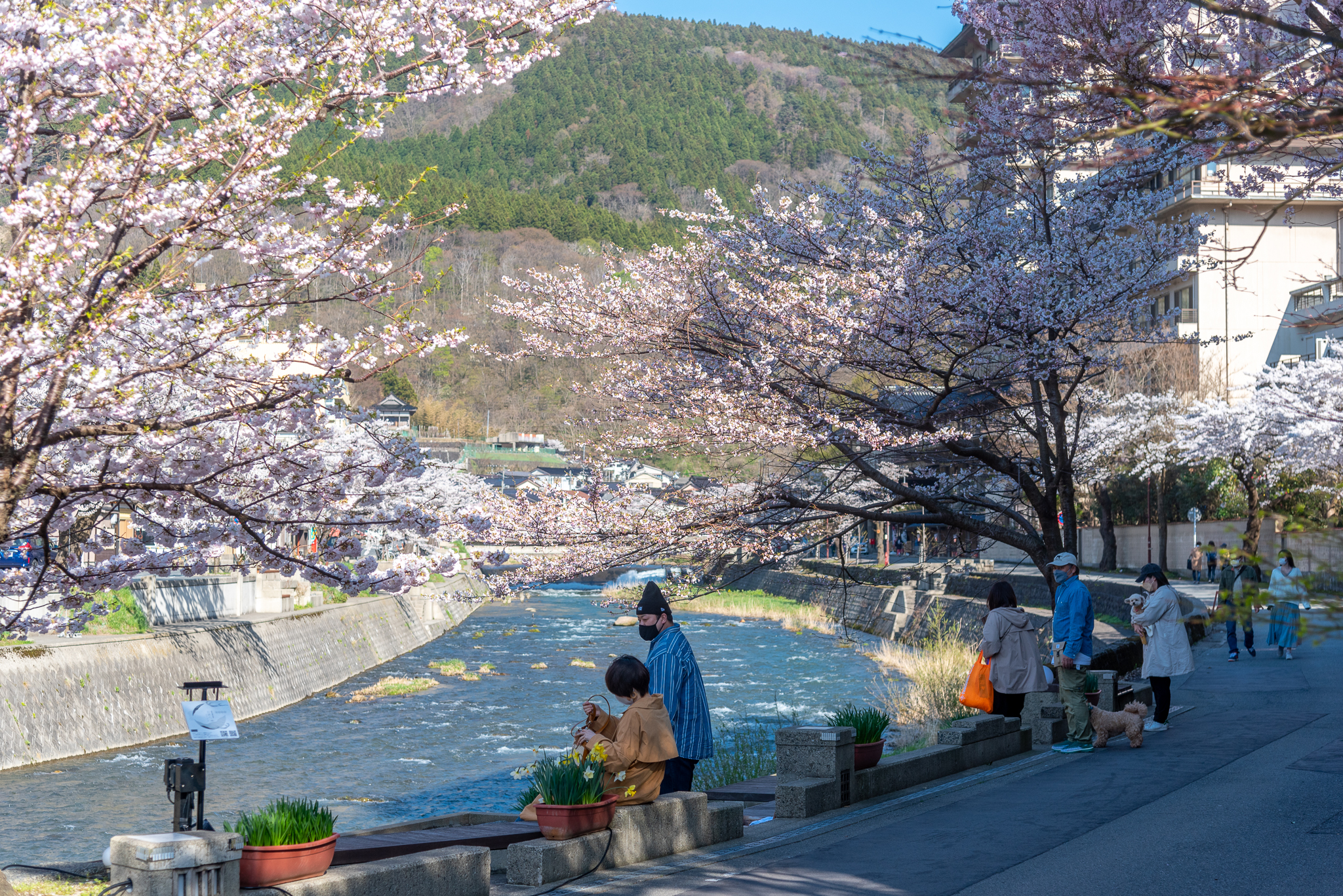
One of the three foot baths in Atsumi Onsen. The word “Mokke” is used in the Shonai region’s dialect to express gratitude and other sentiments. From Mokkeyu, you can enjoy views of the Atsumi River flowing through Atsumi Onsen and Mt. Atsumi. In the autumn, you may even get to see salmon swimming upstream.
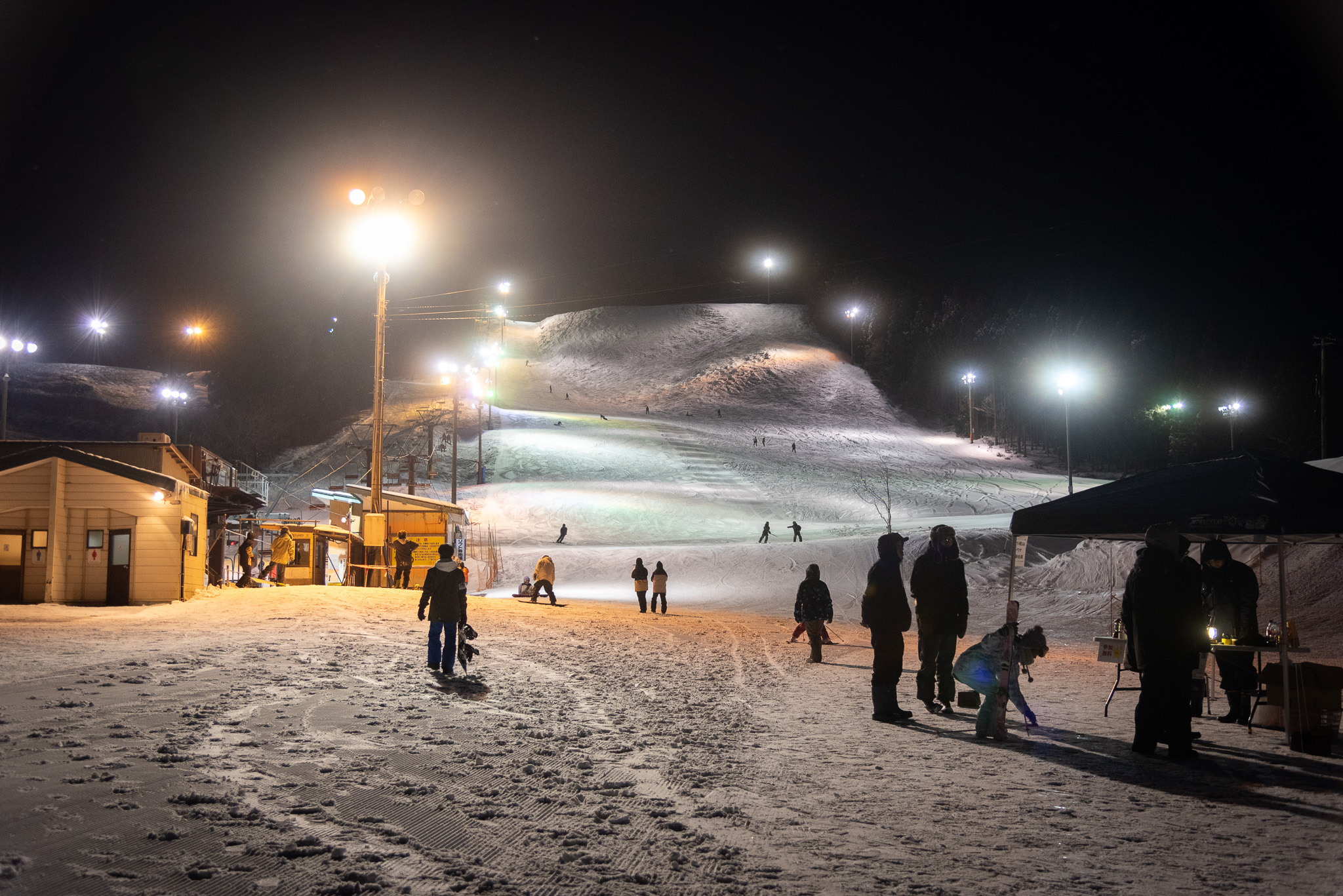
The ski resort is close to the city center and can be easily visited.
There is a free sled ride right in front of the parking lot, where even small children can have fun. The slopes are in a great location overlooking the Shonai Plain, and during night skiing, you can enjoy the night view. On the way home, a hot spring bath at “Kushibiki Onsen Yu~Town” is also recommended.
Rent skis for 2,100 yen, and outfits for 2,000 yen.(Rent snowboards for 3,100 yen ).
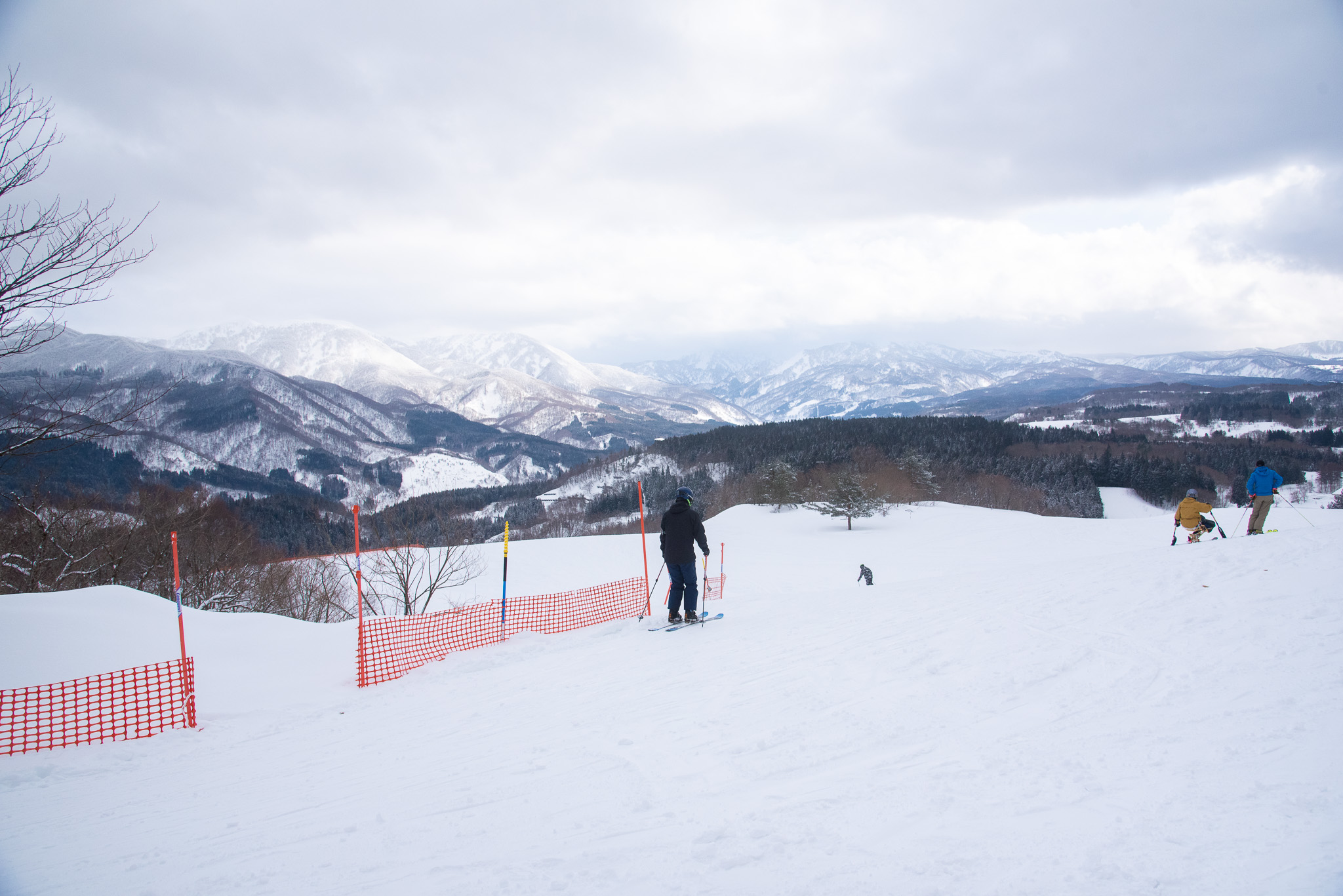
A comfy ski resort in Tsuruoka adapted to beginners and families, located around Mt. Haguro.
Rent skis (or snowboards), boots, stocks for 3,000 yen, and outfits for 2,000 yen.
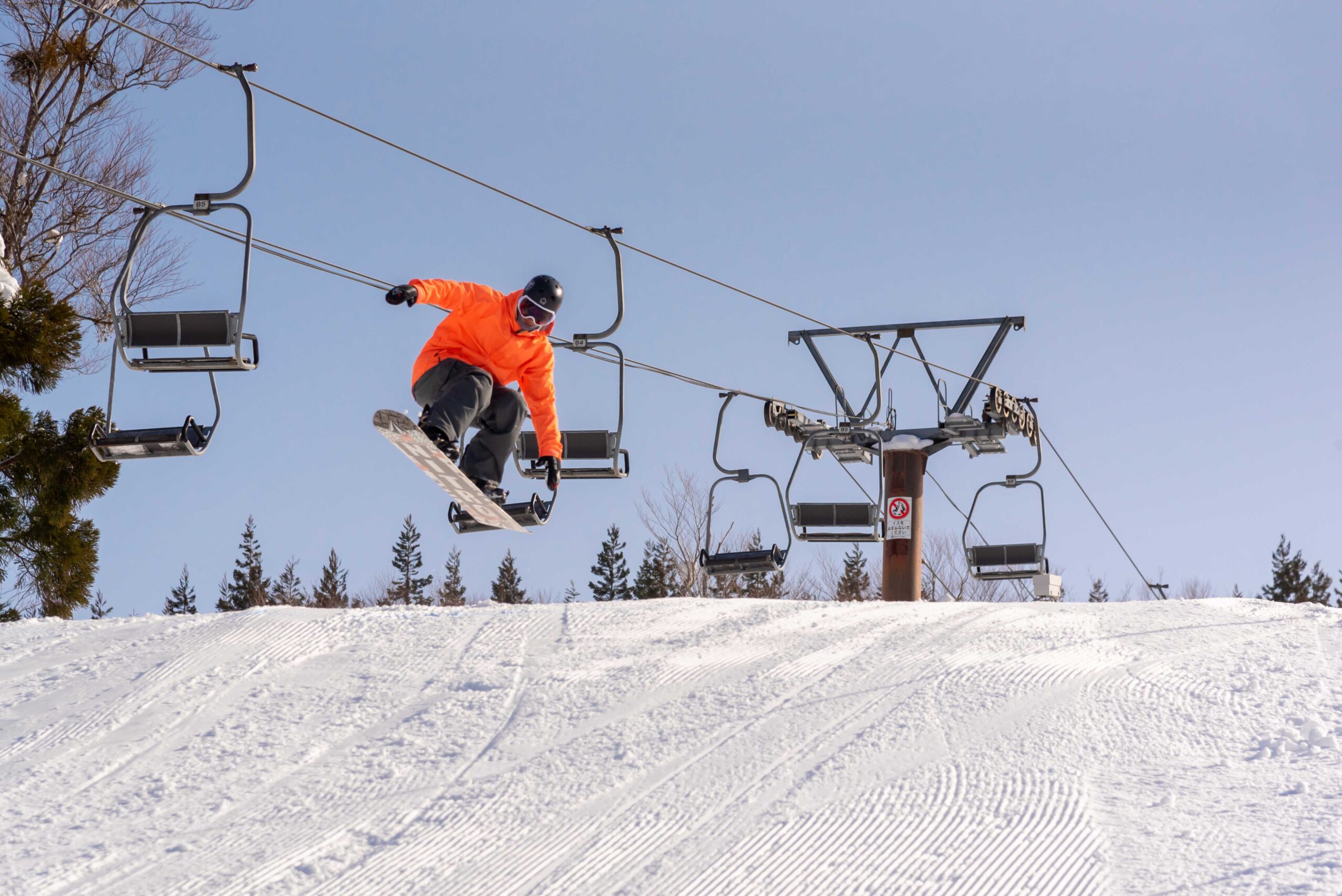
The largest ski resort in Tsuruoka, located near Mt. Yudono.
The longest course is 2 km long. It also has a half-pipe, a snow park, an area for kids, a sled course, and a ski school.
Rent skis (or snowboards), boots, and stocks for 3,400 yen, and outfits for 2,300 yen.
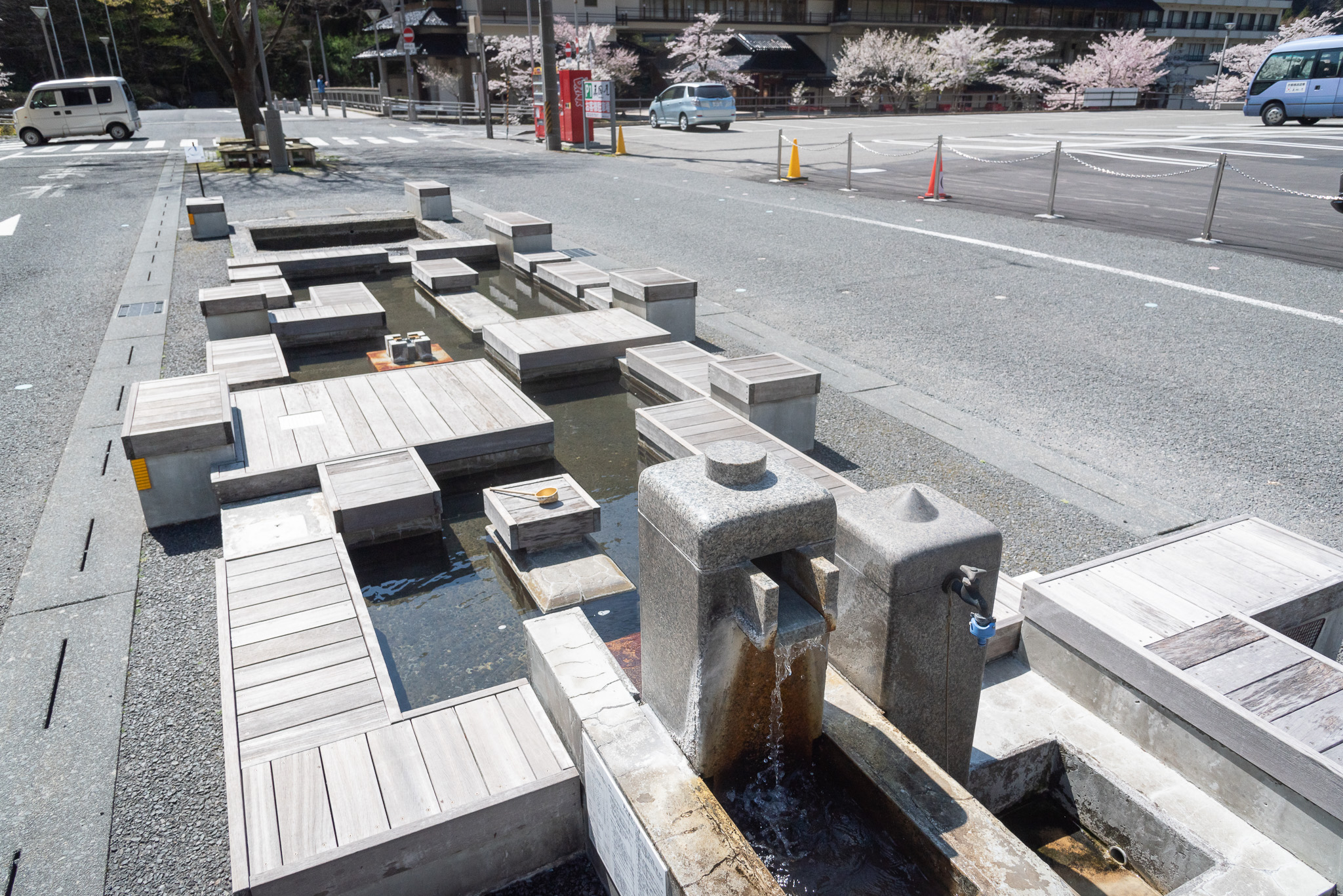
One of the three foot baths in Atsumi Onsen. The name “Anbeyu” “あんべ湯” is a play on words, combining “アベニュー (Avenue)” meaning street or avenue, and “あんべ,” a local term from the Atsumi region meaning well-being or condition. This foot bath is situated in the middle of the road and offers a unique experience where you can enjoy a foot soak right in the midst of the street.
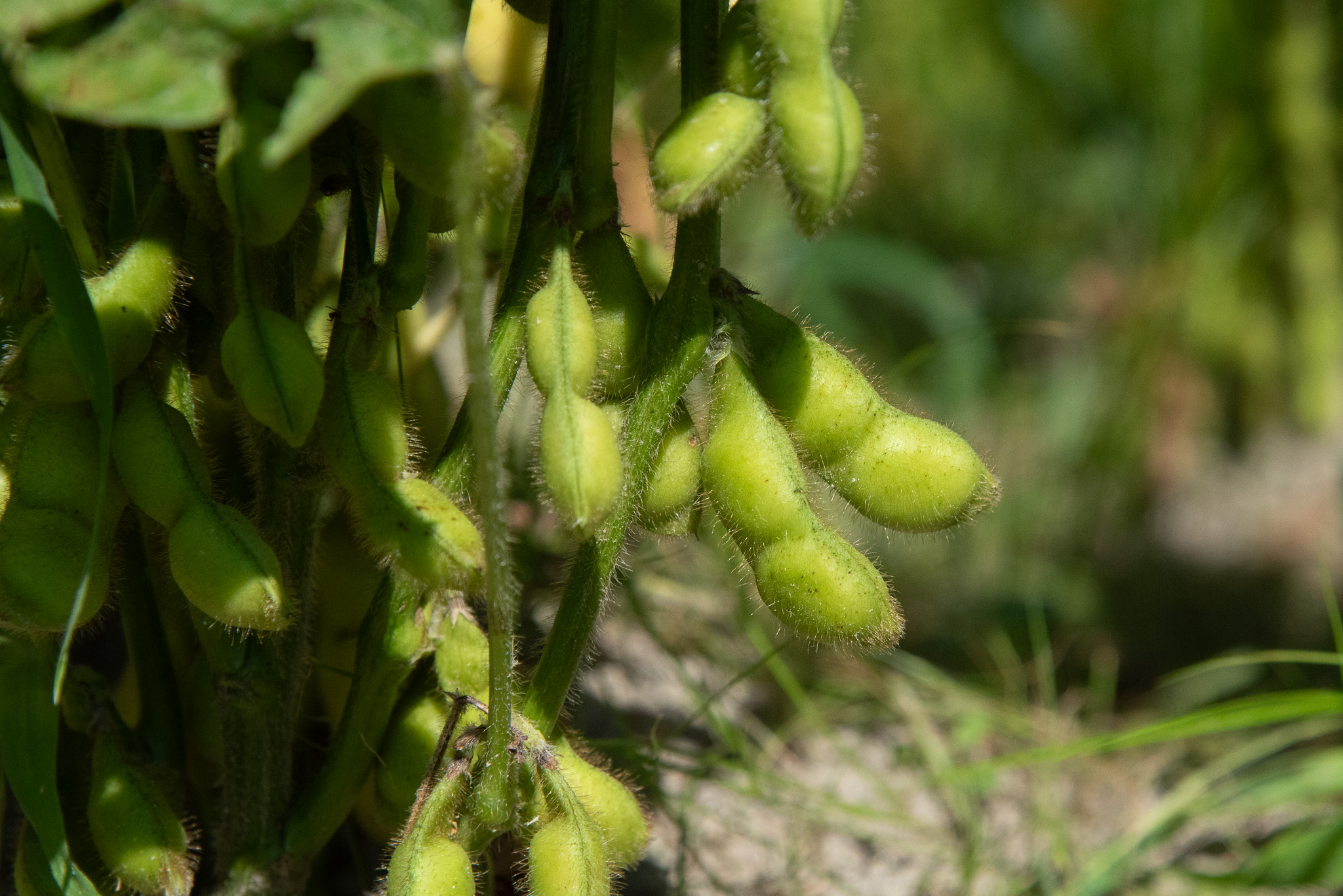
Dadachamame soybeans, Shonai region’s special variety of edamame, exude a delightful roasted aroma when boiled, and as they touch your taste buds, they unveil their sweetness and umami. These beans have gained nationwide recognition and even featured in a commercial by a well-known beer company, establishing themselves as the finest edamame produced in Tsuruoka.
What makes Dadachamame truly special is their distinctive fragrance and the deepening sweetness that intensifies with every chew – making them the undisputed “King of the Edamame”. There’s a wide range of varieties within this lineage, with early harvest varieties hitting the market around mid-July and the peak season arriving shortly after the Obon Festival, extending through mid-September.
Dadachamame are notably finicky edamame; even when grown from the same seed in other regions, their unique characteristics tend to disappear, an idiosyncrasy well-suited to the local conditions of Tsuruoka.
The term “Dadacha” in the local dialect of Shonai means “father” or “dad” (“mame” meaning “bean”). Legend has it that the lord of the Shonai Domain, who had a fondness for edamame, would ask where each batch of edamame came from and declared, “Whose dad has grown this edamame I’m eating today?” Over time, this led to the nickname “Dadachamame.”
Dadachamame are recognized by their brown fuzz and deep indentation in the pods. When boiled, they release a unique aroma reminiscent of corn, and their flavor deepens and becomes more delicious with every bite. It is said that even if the same seeds are cultivated in other regions, the specific umami of Dadachamame tends to disappear.
People like to boil them for a few minutes with a pinch of salt, to eat them cold with a fresh pint of beer.
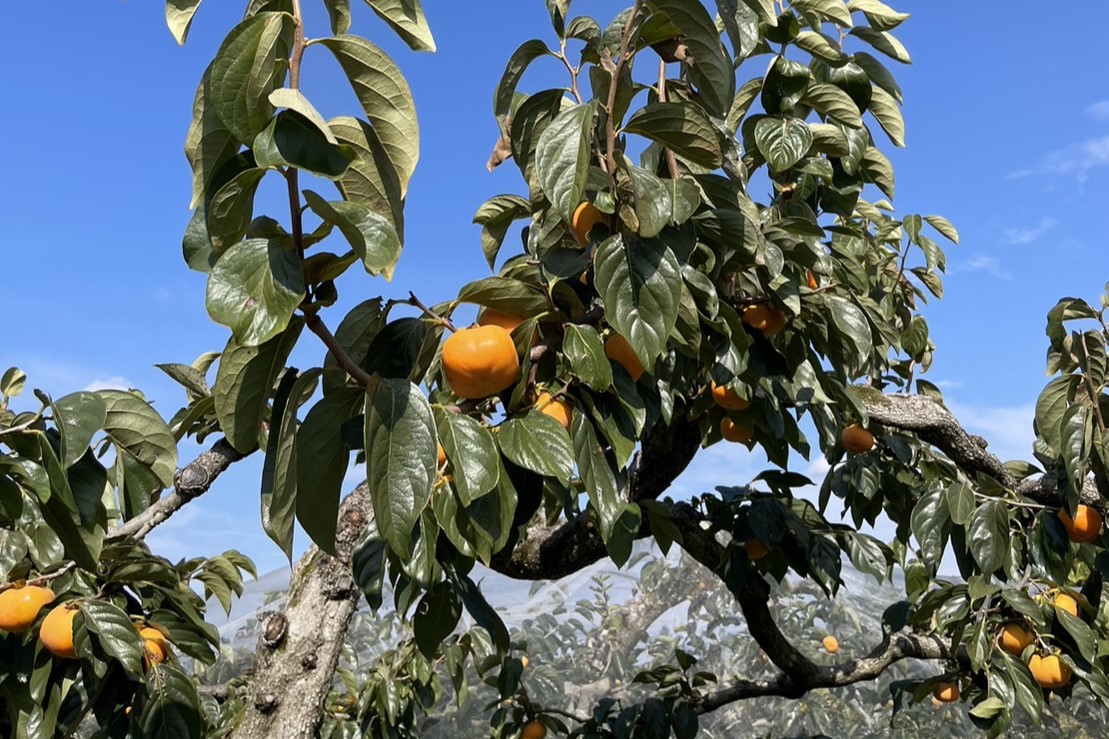
The “Hiratanenashi” 平核無 (“seedless flat”) persimmon, which is cultivated throughout the Shonai region, is native to the region. The original trees of Shonai persimmons can still be found in Torigi-cho, Tsuruoka City, and they are designated as natural monuments of Tsuruoka City. This variety of persimmon is characterized by its seedless nature, square and flat shape, and firm flesh. After the astringency is removed (using fizzy water or alcohol then sealing the fruits to rest for a few days), it becomes pleasantly sweet with a refreshing taste.
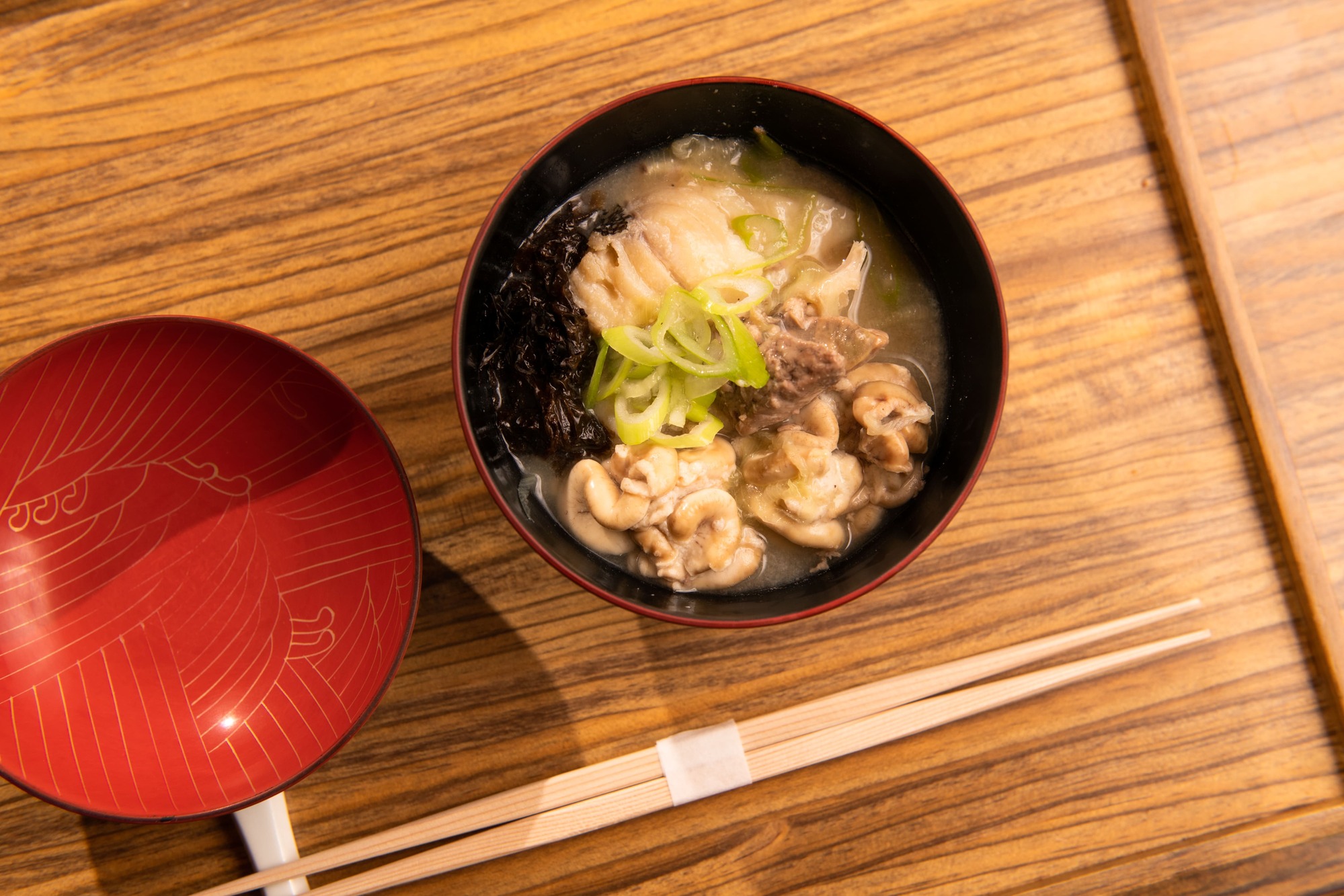
During the winter in Tsuruoka, a local specialty known as “Kandara-jiru” is made using winter cod, also known as “Kandara.” These cod are rich in fat and migrate to the rough waters of the Japan Sea for spawning during the harsh winter. Kandara-jiru is a truly indulgent and hearty dish that uses the entire cod, including its liver and milt, in a miso-based hot pot.
In the midst of the severe cold of the season, locals have been enjoying piping hot Kandara-jiru to warm both their hearts and bodies for generations. The cod, with its ample fat, offers a simple yet sweet flavor, while the fresh milt is tender and free of any undesirable odors, providing a melt-in-your-mouth texture. By the time you’ve savored every last drop of the soup, your entire body will be comfortably warm. This is a Tsuruoka pride, a taste that can only be enjoyed during the winter.
The dish also features leek and tofu.
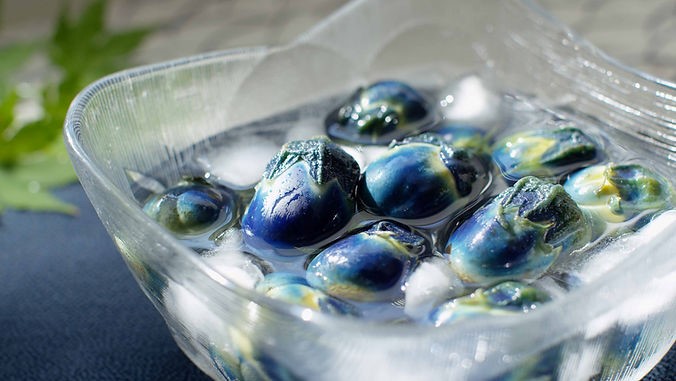
In Tsuruoka’s rural areas, there is a tradition of cultivating small, round eggplants with firm flesh. These eggplants are often referred to as “Minden nasu,” and they are known for their excellent texture. It is said that the first eggplant mentioned in Matsuo Basho’s “Oku no Hosomichi” (“The Narrow Road to the Deep North”) was the “Minden nasu” (known as “Sotonaito-jima Nasu” at the time), suggesting its historical significance in the region.
The minden eggplant is commonly eaten as tsukemono, pickled in a mustard cream (karashizuke 辛子漬け) or in salt (asazuke 浅漬け).
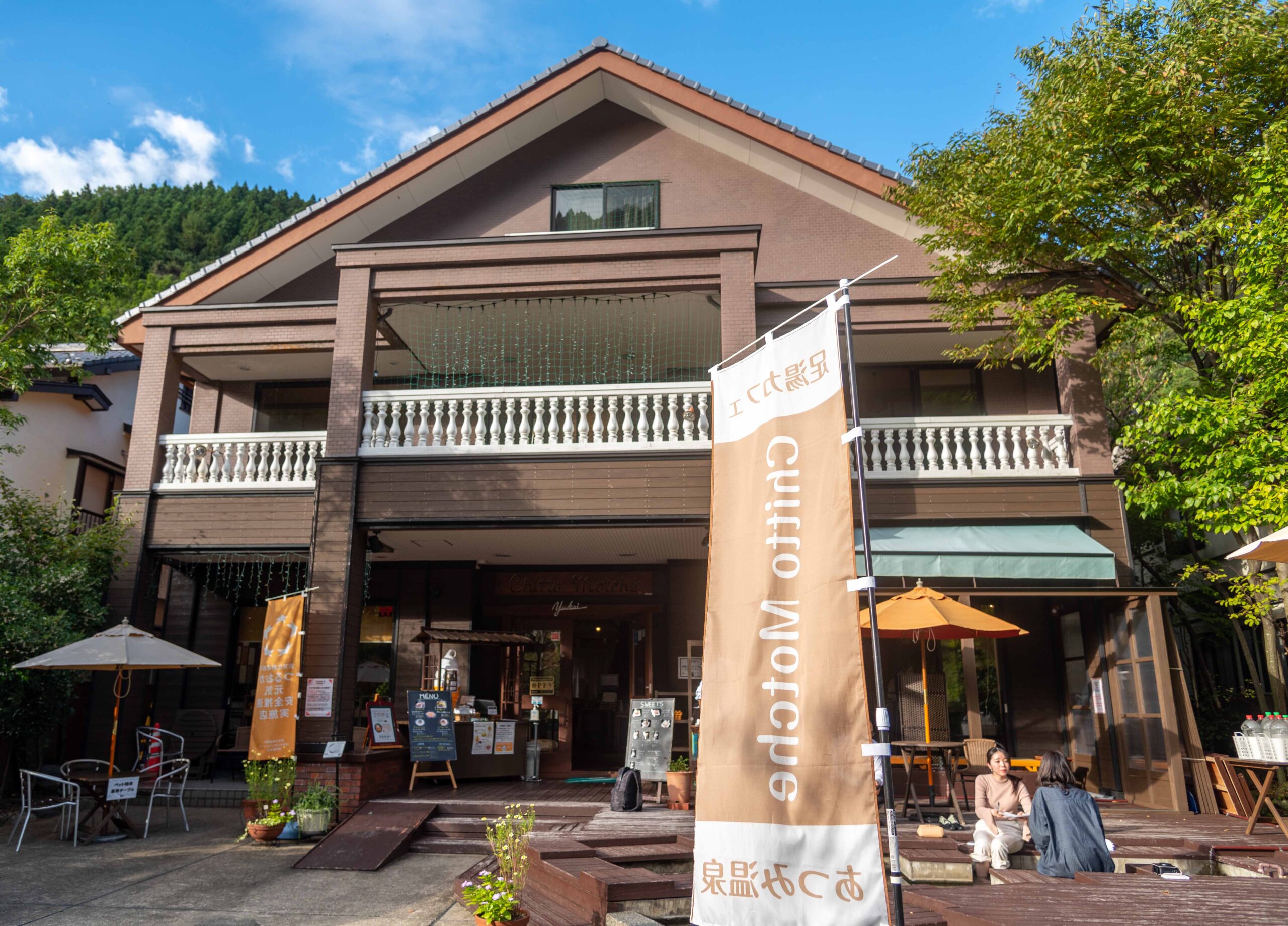
The facility’s nickname, “Chittomoshe,” comes from the local dialect in Atsumi, which means “a bit funny.” Inside the building, there’s an exhibition space where you can find and purchase various folk crafts from the Atsumi region and beyond. Additionally, there’s an open deck with a foot bath called “Mosshe-yu.” (Entrance and use of the foot bath are free. Please bring your own foot bath towel or purchase the original logo towel on-site.)
This site uses cookies to help us understand better the usage patterns of visitors on the website. By clicking "Agree," you consent to the use of cookies on this site. Click here to see our Cookie Policy.